When a drawing or a parts bin says "UNC" next to a bolt, it is not naming the material, the finish, or the strength grade. It is naming the thread. UNC stands for Unified National Coarse, the inch-based coarse thread series that has been a workshop standard for general-purpose fastening for decades. If you have ever picked up a 1/4-20 bolt and wondered why it turns so quickly into a tapped hole, you have already met UNC.
What UNC Means on a Bolt
UNC is part of the Unified National thread system. The letters break down simply: UN for Unified National, C for Coarse. The thread form has a 60-degree included angle, dimensions are expressed in inches, and pitch is given as threads per inch (TPI). A coarse series has fewer threads per inch than UNF (Unified National Fine) at the same nominal diameter, so the thread is deeper and the bolt engages with fewer turns.
A complete callout might read 1/4-20 UNC 2A. The 1/4 is the nominal major diameter in inches; 20 is the number of threads per inch; UNC identifies the series; and 2A is the external thread tolerance class. Internal threads use B classes, such as 2B. When no class is shown, 2A/2B is the usual commercial expectation, but the drawing should always be checked.
Common UNC thread sizes and their typical general-purpose uses; always verify the full callout and thread class on the drawing.
| Nominal size |
Threads per inch |
Example callout |
Typical use |
| #10 |
24 |
#10-24 UNC |
Small brackets and light equipment |
| 1/4 |
20 |
1/4-20 UNC |
General assembly and fixtures |
| 5/16 |
18 |
5/16-18 UNC |
Machine guards and mounts |
| 3/8 |
16 |
3/8-16 UNC |
Structural brackets and repair work |
| 1/2 |
13 |
1/2-13 UNC |
Heavier general-purpose joints |
| 5/8 |
11 |
5/8-11 UNC |
Equipment frames and supports |
The table is a starting point, not a substitute for the callout. A 3/8-16 UNC bolt and a 3/8-24 UNF bolt share the same nominal diameter but will not interchange. The TPI and series must match.
How to Read a UNC Bolt Callout
Reading UNC correctly prevents the most common purchasing error: ordering by diameter alone. The callout is a compact specification. In 5/16-18 UNC 2A x 1-1/2 LH, the nominal diameter is 5/16 inch, the thread is 18 TPI coarse, the external thread class is 2A, the length is 1-1/2 inches, and LH means left-hand thread. If LH is absent, the thread is right-hand.
The length of a hex bolt is usually measured from under the head to the end of the shank. Thread length depends on the standard and the bolt style, so a fully threaded bolt and a partially threaded bolt with the same nominal length are not the same part. For tapped holes, the mating internal thread might be 5/16-18 UNC 2B. Mixing an external 2A thread with an internal 3B thread is not automatically wrong, but the fit changes and should be specified deliberately.
- Nominal diameter: the inch size, such as 1/4 or 3/8.
- TPI: the number of threads per inch, which sets the pitch.
- Series: UNC for coarse, UNF for fine.
- Class: 1A, 2A, or 3A for external threads; 1B, 2B, or 3B for internal threads.
- Length and hand: overall length, thread length, and right- or left-hand thread.
UNC vs UNF: What Changes on the Shop Floor
UNC and UNF are both Unified threads with a 60-degree form, but they solve different problems. The coarser UNC pitch gives more thread depth, faster assembly, and better tolerance to nicks, paint, and minor contamination. That is why it is common in cast iron and aluminium housings, general machinery, repair work, and applications where a bolt may be removed and reused.
The finer UNF pitch provides more threads per inch, a larger minor diameter, and usually a slightly higher tensile stress area for the same nominal size. It is often chosen for thin-wall parts, precision equipment, and vibration-sensitive assemblies where a finer adjustment of preload is useful. Neither series is universally "stronger." The right choice depends on the material being tapped, the wall thickness, the vibration profile, the number of assembly cycles, and the tolerances the application can tolerate.
Common Mistakes When Specifying UNC Threads
Several errors appear again and again in specifications and purchase orders.
- Treating UNC as a material or grade. UNC describes thread geometry. A UNC bolt can be carbon steel, stainless steel, or alloy steel, and its strength grade is a separate designation.
- Confusing UNC with BSW. Both are inch-based, but BSW has a 55-degree thread form. They are not interchangeable even when the TPI looks close.
- Confusing UNC with NPT. NPT is a tapered pipe thread intended to seal; UNC is a straight fastening thread.
- Mating a UNC bolt with a UNF nut. The diameters may look alike, but the pitch is different.
- Ignoring thread class and coating. Electroplating or zinc flake can change the effective fit, especially on small threads. A 2A/2B fit that works bare may need attention after coating.
- Forgetting left-hand or special thread lengths. A left-hand thread will not pull into a right-hand hole, and a partially threaded bolt may not clamp a thin joint as expected.
Where UNC Bolts Fit Best
UNC bolts are at home in general industrial assembly, maintenance and repair, agricultural equipment, pump and motor mounts, fixture building, and many automotive aftermarket applications. They are a practical choice when tapped holes are in cast iron or aluminium, when assembly speed matters, and when the joint may be opened several times. In clean, thin-wall, high-vibration applications, a fine thread or a thread-locking feature may be a better fit.
From a manufacturing standpoint, the thread series is only one part of the specification. Material, heat treatment, surface finish, dimensional inspection, and thread gauging all decide whether a batch performs in service. Our team routinely checks thread form and dimensional accuracy against the drawing so that a UNC callout is not treated as a generic note. You can read more about how we keep tolerances under control in our dimensional accuracy article.
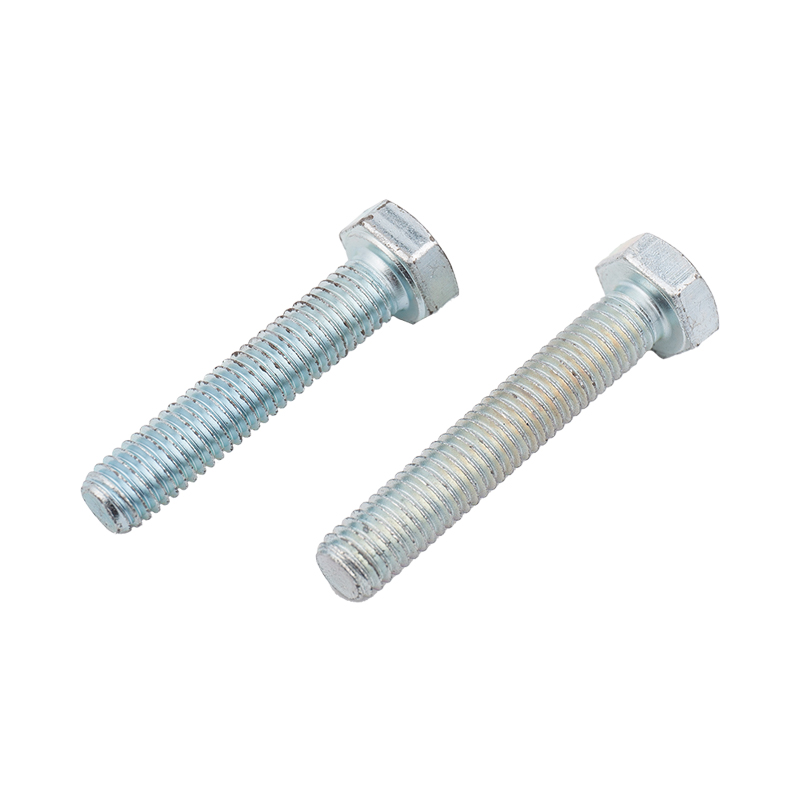 Carbon Steel Hexagonal Bolt for Custom B2B Fastener RequirementsCarbon steel hex bolt page outlines material, international-standard specifications, and surface treatment selected for the use scene, with custom B2B supply available.View Product →
Practical Selection Checklist
When you are specifying a UNC bolt, a short checklist saves a lot of back-and-forth.
- Confirm the series and TPI, not just the nominal diameter.
- State the thread class, such as 2A for an external thread or 2B for an internal thread.
- Identify the material and strength grade separately from the thread callout.
- Specify the finish and whether coating thickness must be considered in the thread fit.
- Give the length, thread length, head style, and hand of thread.
- Check the mating part: a UNC bolt needs a UNC nut or a correctly tapped UNC hole.
- Use the right gauge or thread plug and ring gauge for inspection; calipers alone cannot verify pitch and thread form.
On custom and non-standard work, the earlier those details are fixed, the smoother the sample and production run. We produce standard fasteners and non-standard parts in carbon steel, stainless steel, copper, and alloy steel, and we can work from drawings that call out UNC, UNF, metric, or mixed requirements.
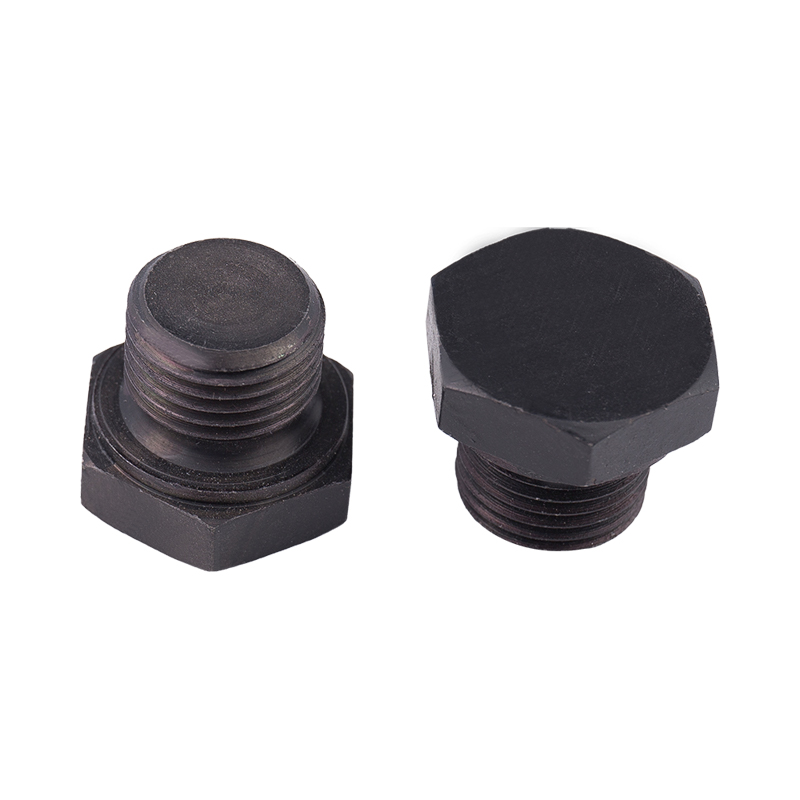 Custom Non-Standard Carbon Steel Hexagonal Bolt with Rubber RingCustom carbon steel hex bolt with rubber ring for sealing pipe or container openings, made to order with specifications on request and 5000-piece minimum.View Product →
UNC is a thread language, not a vague label. Once you read it as Unified National Coarse, check the TPI and class, and match the mating thread, the bolt specification becomes clear. If a drawing is ambiguous, send us the callout and the application details; we will help confirm the thread and the part. That is the kind of practical back-and-forth that keeps a project moving.